What Is a Dansal? The Sri Lankan Tradition of Giving
Updated June 20, 2026
If you travel along any Sri Lankan road during Vesak or Poson, you will sooner or later be waved down by smiling volunteers holding cups of cool faluda or plates of rice. They are not selling anything. They are giving — freely, to anyone who passes, with no expectation of return. This is a dansal (දන්සල), one of the most visible and beloved expressions of generosity in Sri Lankan Buddhist culture.
For visitors, a dansal can be puzzling at first. Why would strangers cook for hundreds of people and hand the food out for free? The answer sits at the heart of Buddhist practice, and understanding it opens a window onto how giving, community and merit are woven together in Sri Lankan life. This guide explains what a dansal is, where the tradition comes from, the different forms it takes, and what to expect if you stop at one.
The meaning of the word
The Sinhala word dansala (often written 'dansal' in English) comes from 'dana', the Pali and Sinhala word for giving or generosity, combined with 'sala', meaning a hall or shed. Literally, then, a dansal is a 'giving hall' — a temporary place set up to give things away. Most often that means food and drink, but the same spirit extends to anything offered freely for the benefit of others.
Dana is the first of the ten perfections (paramita) in Theravada Buddhism and the first step on the path of merit-making. To give without attachment, without expecting thanks or reward, is considered one of the purest wholesome acts a layperson can perform. A dansal turns that abstract teaching into something you can taste.
Why people hold dansals
The motivation behind a dansal is the accumulation of merit (pin). In Buddhist thought, generous acts purify the mind and create positive conditions for the future, both in this life and lives to come. But the practice is rarely framed in transactional terms. Ask an organiser why they do it and the answer is usually simpler: it feels good, it honours the festival, and it brings the neighbourhood together.
Dansals are often organised collectively — by a temple, a workplace, a sports club, a group of friends, or an entire village. Families pool money, vegetables are donated by local farmers, and dozens of volunteers chop, cook and serve through the night. The effort itself is part of the offering. In this way a dansal is as much about community and shared labour as it is about the food handed out.
A short history
Acts of public giving have deep roots in Sri Lankan history. Ancient chronicles describe kings building alms halls and distributing food to monks and the poor, and the merit-making ideals behind these acts are recorded in inscriptions going back well over a thousand years. The modern roadside dansal — open to every passer-by regardless of religion or background — grew out of this long tradition of public dana.
Over the twentieth century the dansal became firmly attached to the Vesak and Poson festivals, when the desire to make merit is strongest. Improvements in roads and transport meant more travellers on the move during the holidays, and dansals sprang up to feed them. Today they range from a single family handing out tea at their gate to enormous operations on main roads serving thousands of meals a day.
What a dansal offers
There is no fixed menu. What you find depends entirely on what the organisers chose to give. Some dansals specialise in a single item made very well; others lay out a full meal. Common offerings include:
- Kanji (kenda) — a nourishing herbal rice porridge, often served early in the morning.
- Rice and curry — a full plate with several vegetable curries, sometimes with a sweet to finish.
- Cool drinks — plain tea, milk coffee, faluda, fruit cordials, king coconut and bottled water.
- Short eats and sweets — vadai, rolls, biscuits, ice cream and traditional sweetmeats.
- Buth packets — pre-wrapped rice parcels handed to travellers who cannot stop for long.
Dansal, thoran and the wider festival
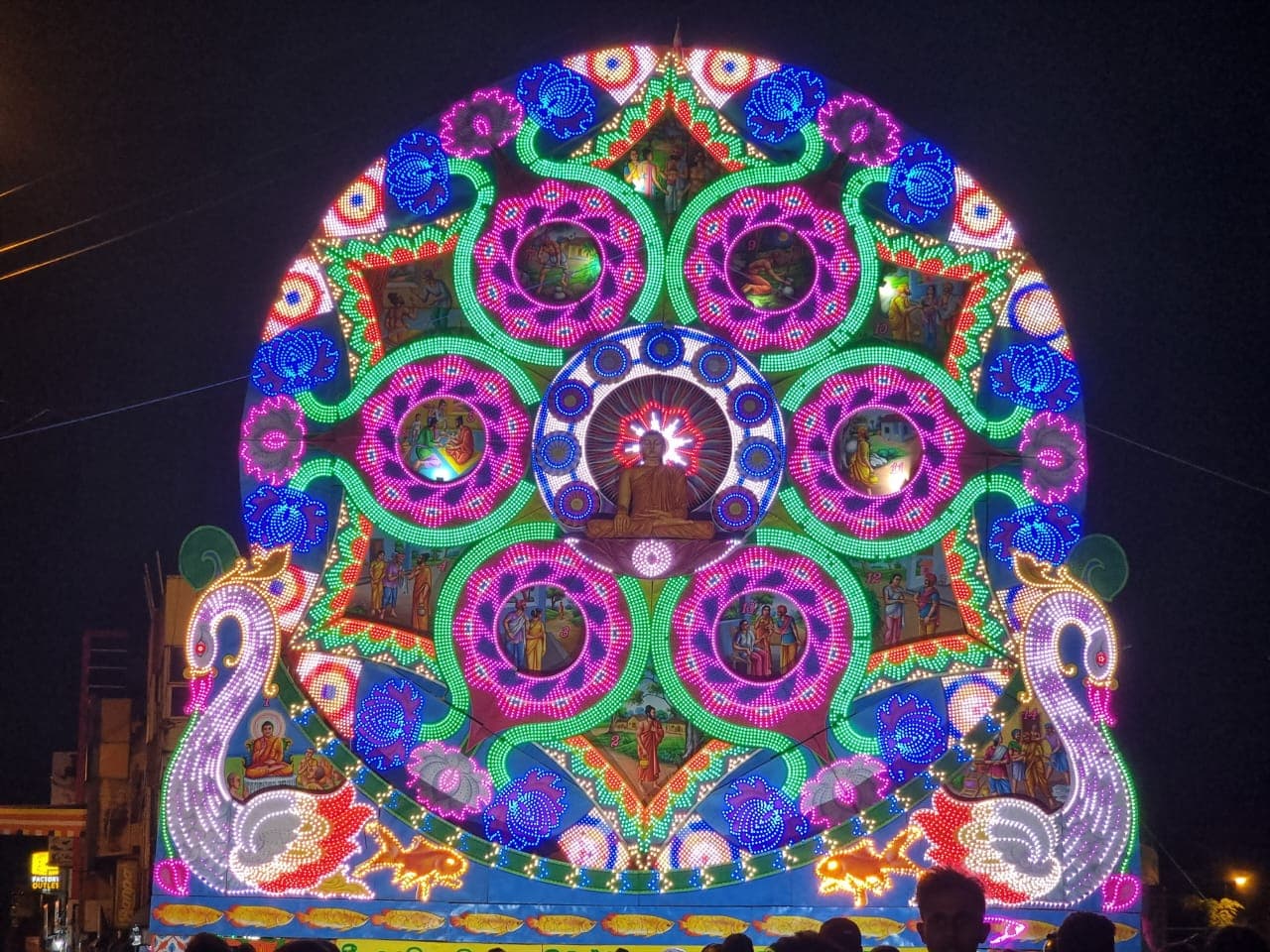
Dansals do not happen in isolation. During Vesak especially, they form part of a larger street celebration that includes thoran (large illuminated pandols depicting stories from the Buddha's previous lives), Vesak lanterns (kuudu) hung outside homes and temples, devotional song stages, and processions. Many people spend the festival nights walking from one display to the next, and dansals keep them fed and refreshed along the way.
On Dansal.lk we map all of these together — food and drink dansals, thoran, and lantern zones — so you can plan a route that takes in the displays you want to see and the refreshments along the way. This is why the site is useful even if you are not looking for food: it shows you where the festival is happening tonight.
What to expect if you stop
Stopping at a dansal is simple and welcoming. You do not need to belong to any religion, know anyone, or bring anything. Pull over where it is safe, join the queue if there is one, accept what is offered, and move on so others can be served. A smile and a quiet word of thanks is always appreciated, though many organisers will tell you no thanks are needed — being able to give is its own reward.
Portions are generous and the pace is busy, particularly in the evenings. If you have dietary restrictions, most savoury dansal food is vegetarian by default, but it is always polite to ask. Above all, take only what you will eat: a dansal runs on the goodwill and limited resources of its volunteers, and wasted food undermines the very generosity it celebrates.
Frequently asked questions
- Is dansal food really free?
- Yes. A dansal is an act of giving (dana). Food and drink are offered to anyone who passes, with no charge and no expectation of payment or return.
- Can non-Buddhists and tourists stop at a dansal?
- Absolutely. Dansals are open to everyone regardless of religion, nationality or background. Visitors are warmly welcomed.
- When are dansals held?
- Most dansals appear during the Vesak (May) and Poson (June) full-moon festivals, and some during other Poya days and special occasions.
- Is dansal food vegetarian?
- Most savoury dansal food is vegetarian by default, in keeping with the festival's spirit, but it's always polite to ask if you have specific dietary needs.